One would logically think it probably can’t get any worse!
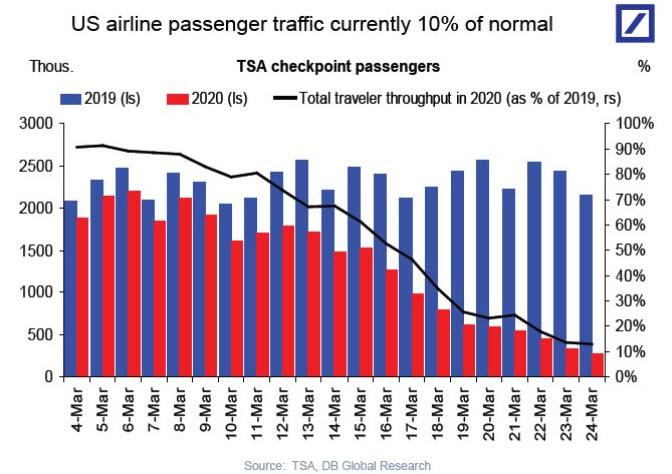
According to this stunning chart from Deutsche Bank’s Torsten Slok, US airline passenger traffic is currently just 10% of normal. As Slok explains, “on a normal day in March, over 2 million people travel by air in the United States. Yesterday that number was 279,018.”
The world has never seen anything like this before, ever! Please remember that the world pension system needs the stock market and the stock market needs the pension system. Rest assured the governments of the world will be throwing everything they can in monetary stimulus to lesson the financial blow as we move forward. At some point there will be clarity and the financial system will start to recover, and at that point things will start to move forward again.
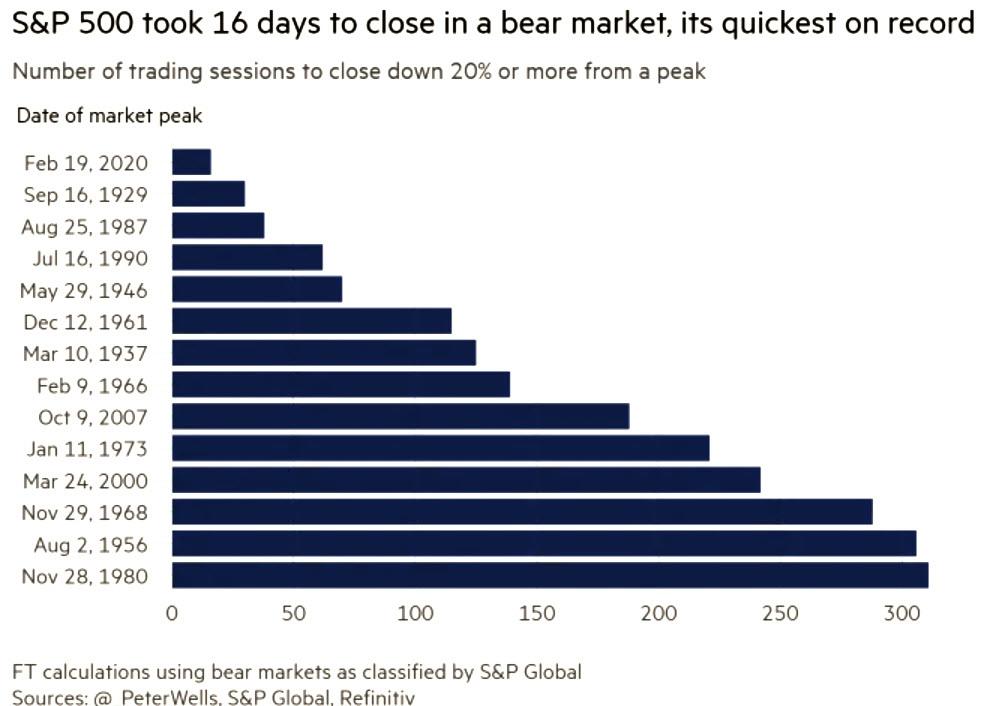
The financial markets have continued falling this week, making this recent crash the fastest plunge into a bear market in history:
For a long time, scientists have known that certain types of fungi are attracted to radiation, and can actually help to break down and neutralize radiation in certain environments.
The radioactive site of the abandoned Chernobyl Nuclear Power Plant has acted as a real-life laboratory in many ways over the years, giving researchers a look into the physical impact that radiation has on plant and animal life.
In 1991, while a team of researchers was searching the Chernobyl area remotely with robots, they noticed black-spotted fungi growing on the walls of one of the nuclear reactors. They also observed that the fungi appeared to be breaking down radioactive graphite from the core itself. The fungi also seemed to be growing towards the source of the radiation, as if it was attracted to it.
Follow up research in 2007, at the University of Saskatchewan found that different types of fungi are attracted to radiation. A team led by Professor Ekaterina Dadachova observed that some types of fungi grew more rapidly when exposed to radiation.
The three species that were tested were Cladosporium sphaerospermum, Cryptococcus neoformans and Wangiella dermatitidis, all of which grew faster when exposed to radiation. The scientists believe that since these species had large amounts of the pigment melanin, it allows them to absorb things like radiation and convert it into chemical energy for growth.
Another follow-up study, in which eight species collected from the Chernobyl area were sent to the International Space Station (ISS) began in 2016, but has yet to be published. Scientists are eagerly awaiting the results of the study, considering that the samples are being exposed to between 40 and 80 times more radiation than they would here on Earth. If this study is successful, experts hope that the knowledge gained can be used to produce drugs that could protect astronauts from radiation on long-term missions.
It has also been suggested that the results of this study could lead to the development of fungi-based cancer treatments.
This was a time bomb waiting to happen, especially since most colleges have spent millions on expanding campuses for more profits and ever increasing student populations. To bad they didn’t use common sense in their actions!
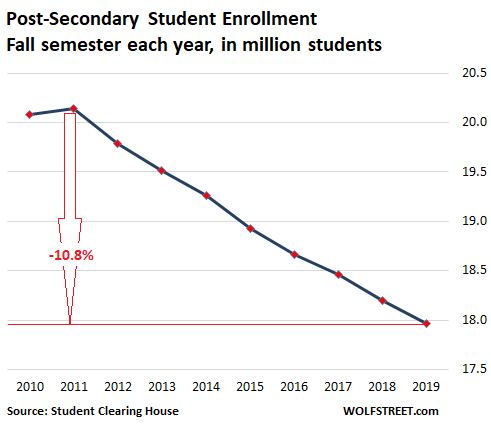
With college costs blowing through the roof, with “luxury student housing” and not so luxury “student housing” having become asset classes – including, of course, CMBS, now in rough waters – for global investors, with textbook publishers gouging students to the nth degree, and with the monetary value of higher education questioned in more and more corners, the inevitable happened once again: College enrollment dropped for the eighth year in a row.
The post-secondary student headcount – undergraduate and graduate students combined – in the fall semester of 2019 fell 1.3% from the fall semester last year, or by over 231,000 students to 17.97 million students, according to the Student Clearing House today. In the fall of 2011, the peak year, 20.14 million students had been enrolled. Since then, enrollment has dropped by 10.8%, or by 2.17 million students:
This is based on enrollment data submitted to the Student Clearing House by the schools. It does not include international students, which account for just under 5% of total student enrollment in the US. Duplicate headcounts – one student enrolled in two institutions – are removed from the data to eliminate double-counting.
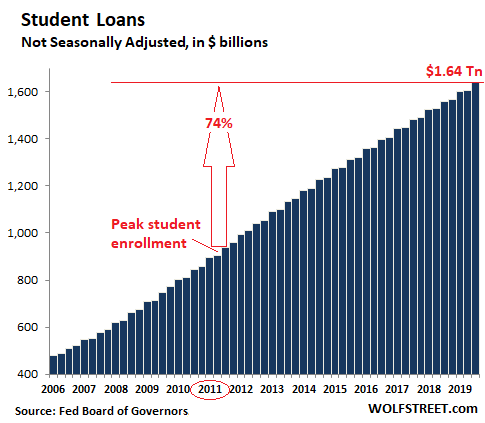
The 10.8% decline in enrollment since 2011 comes even as student loan balances have surged 74% over the same period, from $940 billion to $1.64 trillion:
Enrollment in for-profit colleges collapses.
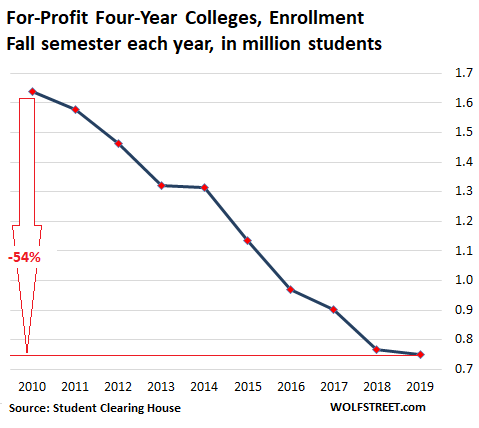
The overall decline in enrollment hasn’t been spread evenly across the board. After myriad scandals, lawsuits, government action, and government inaction, enrollment in for-profit four-year colleges has plunged by 54%, from 1.64 million student in the fall of 2010, as far back as the data series is available, to 750,000 now.
The current year-over-year decline of 2.1% pales compared to the plunges of 15% in 2018, of 7% in 2017, of 15% in 2016, and of 14% in 2015. Despite the relatively small share of total enrollment – by 2019, the share has withered to just 4% – these for-profit colleges account for 41% to the total decline in enrollment since 2001:
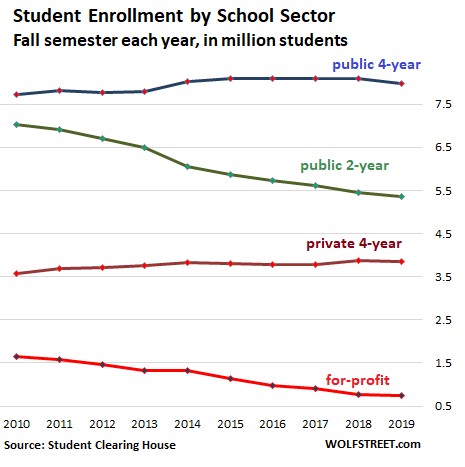
Enrollment at public two-year schools, such as junior colleges, has plunged by 22% since 2011, to 5.37 million (green line in the chart below).
But enrollment at private nonprofit four-year colleges has ticked up 3.9% since 2011. Yet, even these schools saw enrollment decline by 0.6% over the past year, to 3.84 million (brown line in the chart below).
And public four-year schools too had been hanging in there and the student headcount remains up 2.2% from 2011 though it too declined 1.2% over the past 12 months, to 7.82 million. At public schools, the peak was in 2016 with 8.1 million students (blue line):
Where the heck are the men?
Women by far outnumbered men in total enrollment in the fall semester of 2019 with 10.63 million women enrolled and just 7.61 million men, meaning that overall there are now 40% more women in college than men:
At public four-year schools, there were 30% more women (4.51 million) than men (3.48 million)
At private non-profit four-year schools, there were 50% more women (2.32 million) than men (1.54 million)
At private for-profit four-year schools, there were more than twice as many woman (508,000) than men (241,000).
At public two-year schools, there were 38% more women (3.11 million) than men (2.26 million).
Over the past three years, enrollment has declined for both men and women, but faster for men (-5.2%) than for women (-1.4%). Since 2011, enrollment has declined by 13% for men and by 9.4% for women.
Enrollment by state.
Of the big four states, California had by far the most students, at 2.45 million. Over the 12-month period, enrollment ticked down by 0.8%, and over the three-year period by 2.7%.
In Texas, with 1.49 million students, enrollment inched up by 0.3% this year, and by 0.7% from three years ago.
In New York, at 1.04 million students, enrollment declined 1.8% year-over-year and fell 4.4% over the three-year period.
In Florida, with 933,000 students, enrollment fell by 5.3% year-over-year, or by 52,328 students, the largest headcount decline among the states. And it fell 7.0% over the three-year period.
Enrollment in 35 states declined. Here are the states with largest enrollment declines by percentage change this year:
Alaska: -10.6% year-over-year to 22,300 students; -14.3% from 2017
Florida: -5.3% year-over-year to 933,000 students, -7.0% from 2017
Arkansas: -4.9% year-over-year to 144,000 students; -7.2% from 2017
Missouri: -4.4% year-over-year to 323,400 students; -6.9% from 2017
Vermont: -4.4% year-over-year to 38,200 students; -4.5% from 2017
Wyoming: -4.4% year-over-year to 27,600 students; -5.8% from 2017.
And in 15 states, enrollment increased. Here are the biggest gainers:
Utah: +4.9% year-over-year to 362,000 students; +13.8% from 2017
New Hampshire: +3.4% year-over-year to 157,200; +6.4% since 2017
Arizona: +1.8% year-over-year to 456,543 students; +1.1% from 2017, having dipped in 2018
Georgia: +1.5% year-over-year to 518,800 students; +5.5% from 2017
Kentucky: +1.5% year-over-year to 243,300 students; +1.8% from 2017
The overarching theme is the horrible expense of getting a higher education, as each layer element in the University-Corporate-Financial Complex extracts its pound of flesh, largely funded by parental sacrifices and by student loans, which are a mix of taxpayers funds when the loans default and students’ future sacrifices when the loans don’t default. The vision of a pile of student loans for years to come act as a discouragement to students who spend more than two minutes thinking about it.
But clearly, there are more factors at work. The collapse of enrollment in for-profit colleges is a result of numerous scandals and scams that left students with huge student loans and either no degree or with a degree that’s utterly worthless. It is likely that these for-profit schools marketed to people that would otherwise not have gone to university and enticed them with government-funded student loans.
The declining proportion of men among students has long been observed. That women flock to higher education is a great thing, but why did men bail on the system in such large numbers? This is subject to endless and wide-ranging discussions. One explanation that has been offered, and only a partial one, and only covering the past few years, is the relatively good job market where young men decided for forgo a higher education and instead enter the workforce after high school – and that makes sense in many cases, especially if it involves learning a trade.
Whatever the explanations may be, for most parents and students it has become a daunting task to pay for higher education and feed the University-Corporate-Financial Complex.
Putting this in the context of the deadly SARS epidemic, the coronavirus pandemic has now officially exceeded SARS in cumulative cases in just two weeks.
Summary:
First human-to-human transmission confirmed in US
9,821 confirmed cases worldwide, 213 fatalities
South Korea confirms first human-to-human transmission
China reported largest one-day jump in fatalities on Wednesday with
Hong Kong warns of surgical mask shortage
Russia closes border
6,000 quarantined aboard Italian cruise ship
Thailand leads with most cases outside China (14)
Chinese national hospitalized and quarantined in York
Virus arrives in India, Philippines
Air France suspends flights to/from mainland
IMF now monitoring crisis as economic fears grow
State Department authorizes personnel to evacuate China
WHO declares global pandemic
American Airlines pilots union files lawsuit to end travel to China
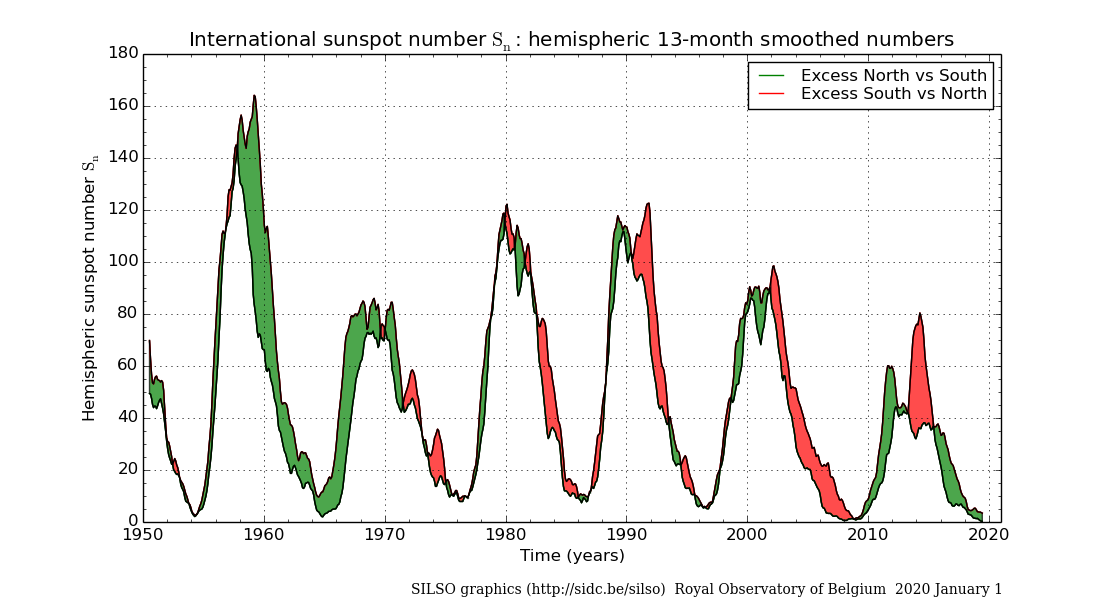
Predictions for solar cycle #25 made by the National Oceanic and Atmospheric Administration’s (NOAA) Space Weather Prediction Center (SWPC), NASA and the International Solar Energy Society (ISES) anticipate a deep minimum and a maximum that will occur between the years 2023 and 2026. During that maximum, they predict the Sun will have between 95 and 130 sunspots.
* * *
As wemove further into 2020, solar activity dwindles. This year, solar activity will be marked as the lowest in over 200 years. The low in the sun’s 11-year cycle will also have at least some repercussions for the climate here on Earth.
On December 20, 2019, Iceland received one of the largest snow storms in its history. The so-called “10-year storm,” brought winds of 100 miles per hour (161 km/h), with one weather station reporting gusts of up to 149 mph (240 km/h), according to a report by Interesting Engineering.
Iceland’s, Europe’s and North America’s weather have historically been tied to the sunspot activity of the Sun.According to NASA, in 2020, the Sun, which is currently in solar cycle number 25, will reach its lowest activity in over 200 years. That means “space weather” will be favorable for exploration beyond Earth, yet it could also very well mean we should prepare for odd or different weather patterns.
The solar cycle is a periodic 11-year fluctuation in the Sun’s magnetic field, during which its North and South poles trade places. This has an enormous effect on the number and size of sunspots, the level of solar radiation, and the ejection of solar material comprised of flares and coronal loops. –Interesting Engineering.
When solar activity gets really low, it can have the effect of a “mini ice age.” The period between 1645 and 1715 was marked by a prolonged sunspot minimum, and this corresponded to a downturn in temperatures in Europe and North America. Named after astronomers Edward Maunder and his wife Annie Russell Maunder, this period became known as the Maunder Minimum. It is also known as “The Little Ice Age.”
Predictions for solar cycle #25 made by the National Oceanic and Atmospheric Administration’s (NOAA) Space Weather Prediction Center (SWPC), NASA and the International Solar Energy Society (ISES)anticipate a deep minimum and a maximum that will occur between the years 2023 and 2026. During that maximum, they predict the Sun will have between 95 and 130 sunspots.
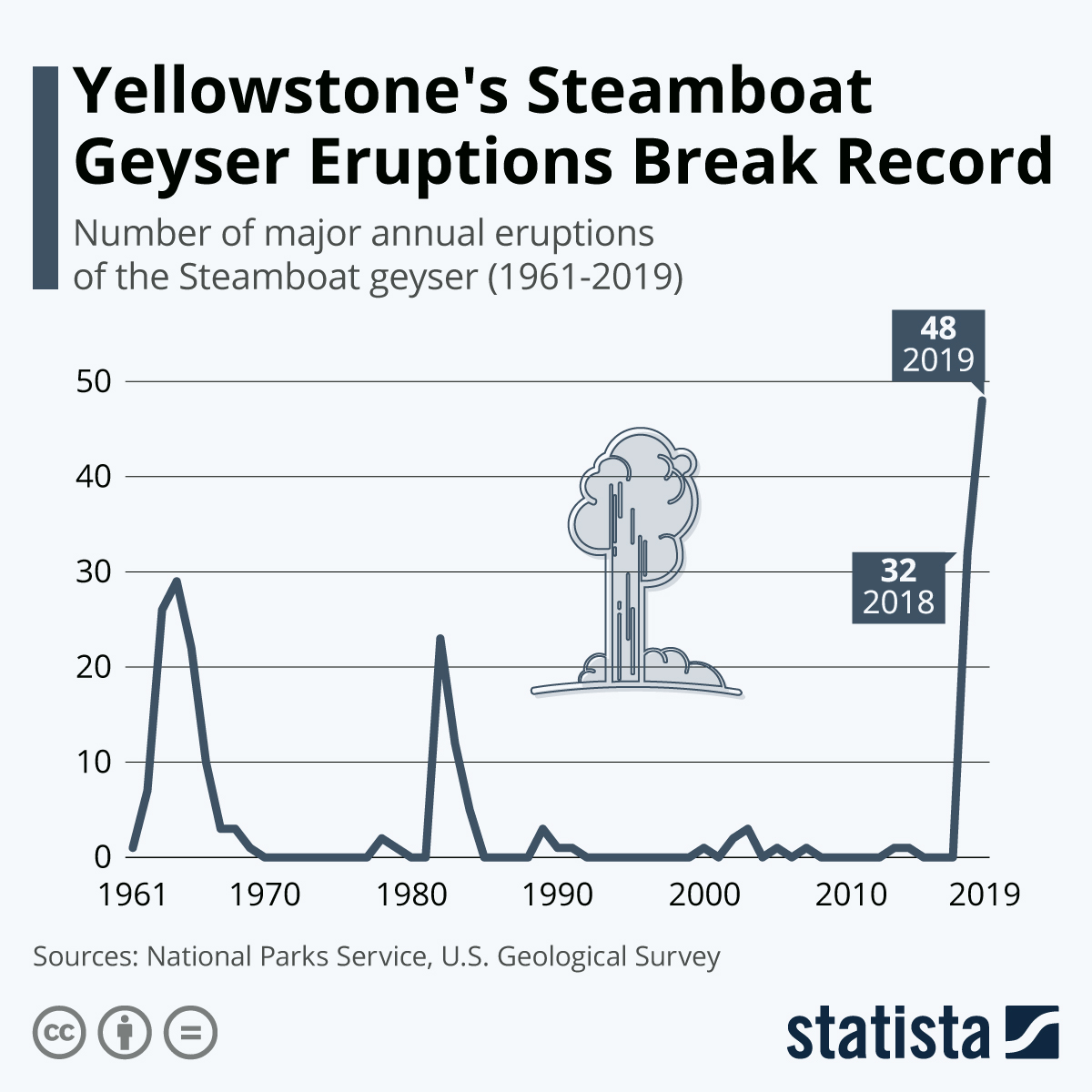
The last time the geyser was remotely this active was in 1964, when it counted 29 eruptions. Records published on the National Park Service website go back as far as 1878, also showing that the geyser has in the past gone years without erupting even a single time.
“Yellowstone’s thermal areas are the surface expression of the deeper magmatic system, and they are always changing,” R. Greg Vaughan, a research scientist with USGS, wrote.
A geyser is a vent through which hot water and steam from below the Earth’s surface can erupt. According to geology.com, geysers are extremely rare phenomena that only occur when many conditions are met. As a result there are only about 1000 geysers in the world. Generally, a geyser forms if water accumulates underground in the proximity of magma, is heated up quickly and ejected onto the surface as steam.
Michael Poland, the scientist in charge of the Yellowstone Volcano Observatory, said the irregularity of Steamboat is just “a geyser being a geyser.” Poland added: “Steamboat clearly has a mind of its own “and right now it’s putting its independence on display.”
At the London Summit, the 29 member countries of NATO agreed to “guarantee the security of our communications, including 5G”. Why is this fifth generation of mobile data transmission so important for NATO?
While the earlier technologies were perfected to create ever more advanced smartphones, 5G is designed not only to improve their performance, but mainly to link digital systems which need enormous quantities of data in order to work automatically. The most important 5G applications will not be intended for civil use, but for the military domain.
The possibilities offered by this new technology are explained by the Defense Applications of 5G Network Technology, published by the Defense Science Board, a federal committee which provides scientific advice for the Pentagon –
“The emergence of 5G technology, now commercially available, offers the Department of Defense the opportunity to take advantage, at minimal cost, of the benefits of this system for its own operational requirements”.
In other words, the 5G commercial network, built and activated by private companies, will be used by the US armed forces at a much lower expenditure than that necessary if the network were to be set up with an exclusively military goal. Military experts foresee that the 5G system will play an essential role for the use of hypersonic weapons – missiles, including those bearing nuclear warheads, which travel at a speed superior to Mach 5 (five times the speed of sound). In order to guide them on variable trajectories, changing direction in a fraction of a second to avoid interceptor missiles, it is necessary to gather, elaborate and transmit enormous quantities of data in a very short time. The same thing is necessary to activate defences in case of an attack with this type of weapon – since there is not enough time to take such decisions, the only possibility is to rely on 5G automatic systems.
This new technology will also play a key role in the battle network. With the capability of simultaneously linking millions of transceivers within a defined area, it will enable military personnel – departments and individuals – to transmit to one another, almost in real time, maps, photos and other information about the operation under way.
5G will also be extremely important for the secret services and special forces. It will enable control and espionnage systems which are far more efficient than those we use today. It will improve the lethality of killer drones and war robots by giving them the capacity of identifying, following and targeting people on the basis of facial recognition and other characteristics. The 5G network, as a weapon of high-tech capacity, will also become the target for cyber-attacks and war actions carried out with new generation weapons.
As well as the United States, this technology is under development by China and other countries. The international disagreement concerning 5G is therefore not only commercial. The military implications of 5G are almost entirely ignored, because the critics of this technology, including many scientists, are concentrating their attention on its toxic affects for health and the environment, due to exposure to very low-frequency electromagnetic fields. This engagement is of course of the greatest importance, but must be linked to research on the military use of this technology, financed indirectly by ordinary users. One of its greatest attractions, which favours the dissemination of 5G smartphones, will be the possibility of participating, by subscription, in war games of impressive realism in direct contact with players from all over the world. In this way, without realising it, the players will be financing the preparation for war – but this time it will be a real war.
*
You are welcome to forward this article to your email lists.
Manlio Dinucci is a Research Associate of the Centre for Research on Globalization.
The original source of this article is Global Research
Ask any San Franciscan what the state of California has an excess of and the most likely answer will be homeless people (and their excrement, especially with the liberal mecca recording as many as 16,000 “feces complaints” in one week ). Actually, ask just about anyone and the answer will be the same: after all with 130,000 homeless, California is now home to more than a quarter of the nation’s homeless population.
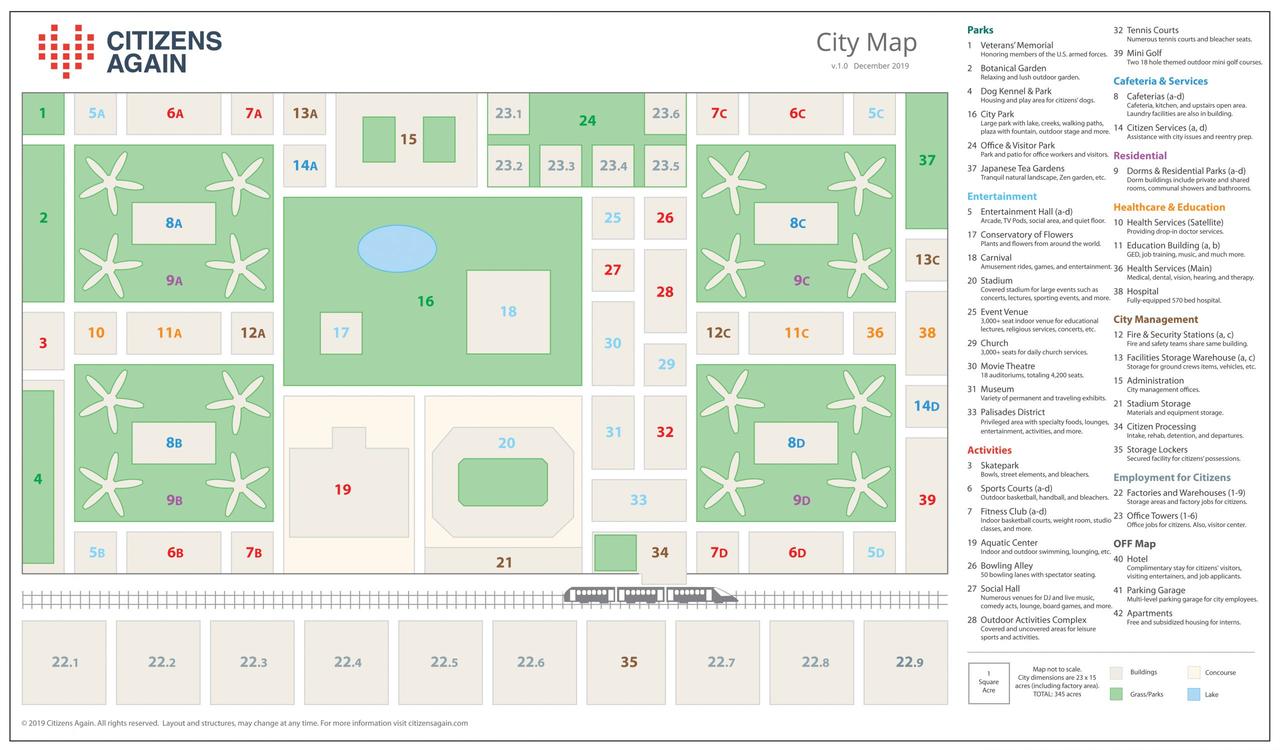
That all may soon change, however, if a new crowdfunding effort succeeds in its effort to solve the US homeless crisis by building a 300-acre city open exclusively for those without a home. Daune Nason, founder of the Folsom-based Citizens Again, released details Thursday of his plans for an estimated $3 billion private city equipped with amenities and services for a 150,000 “high-needs” population, CBS LA reports.
“Qualified citizens” – those who meet as-yet undisclosed criteria – will be allowed to live in the city and are free to leave whenever they wish, says Nason, who adds, “Some might want to stay forever.”
According to a press release, the all-inclusive city which hopes to overtake San Francisco as the mecca of America’s homeless, will offer high-density housing in dormitories consisting of sleeping quarters and communal bathrooms with private showers. Additionally, residents would be provided RFID-enabled wristbands to be tracked constantly gain access to their dorm rooms as well as perform tasks such as job check-in, purchasing items with credits, medicine consumption, and more.
In describing his vision, Nason says that each of the four neighborhoods will have their own cafeteria and kitchen and multiple scheduled eating times to accommodate a 150,000-person population. And since the homeless are probably not best known for their ironclad work ethic, the neighborhoods will also be fitted with tiered seating for residents to watch TV in “a community setting” within their neighborhood.
According to the Citizens Again website, other aspects of the homeless city will include:
Hospitals
Dental and Vision Services
Mental Health
Movie Theatres
Bowling Alleys
Sports Courts
Hotels for visiting family
Dog parks and kennels
Perimeter staff housing
Job Training
GED certificates
Housing & Job Placement
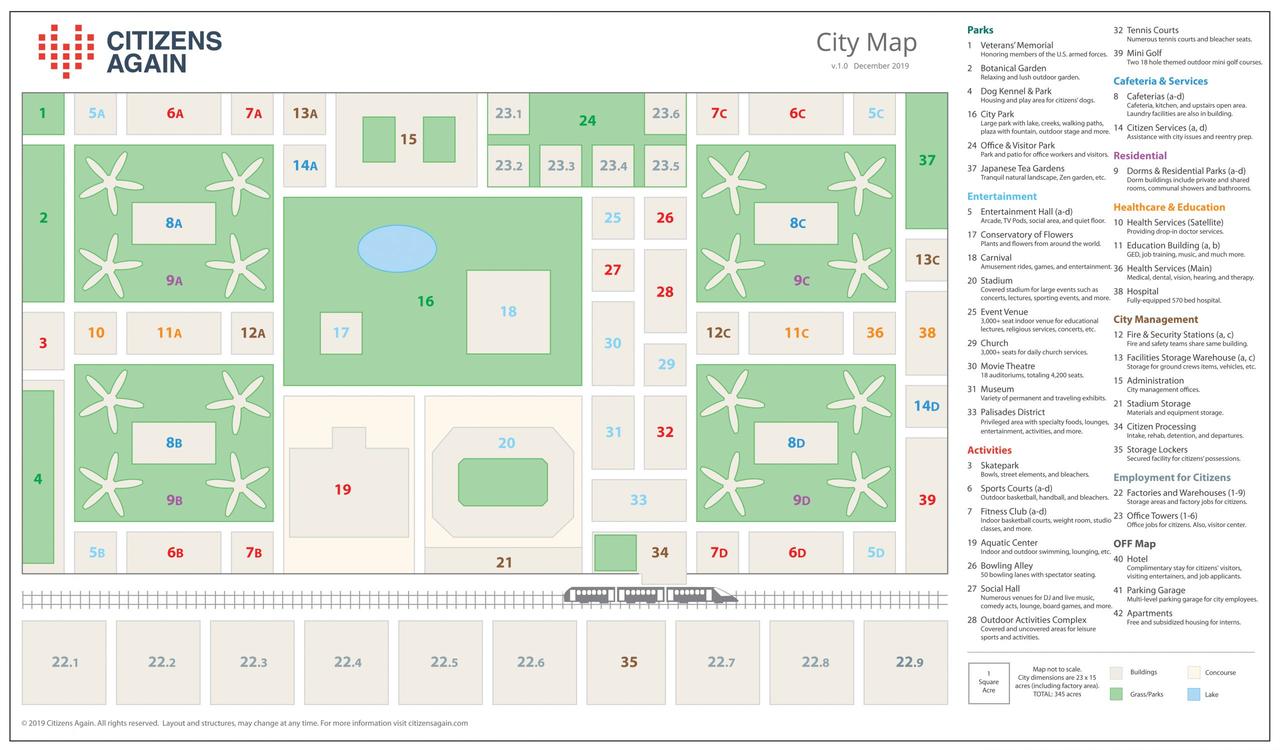
TV Pods are semi-enclosed rooms with tiered seating for citizens to watch TV in a community environment within their neighborhood. Each TV Pod will play a unique channel, giving the entire 1-acre floor many viewing options.Citizens will scan their Wristbands through Access Turnstiles to gain entry to their residential building, their dorm rooms, and venues, as well as perform tasks such as job check-in, purchase items with credits, check their daily schedule, account for meals, log medicine consumption, and more.Dorm rooms are similar concepts to college dorm rooms and sleeping rooms in long-distance passenger trains: they’re a safe, comfortable place to sleep and rest.Tunnels under the City will be used to minimize disruption of Citizen life. Deliveries and logistics can be performed without clogging city streets; city workers can quickly get to job sites; and infrastructure maintenance and upgrades can be performed without tearing up paved city streetsCitizens live in the dorms, which consist of sleeping rooms, and communal bathrooms with private showers. Each building consists of 16 floors, 5 wings per floor, with 40 rooms per wing. That equates to 3,200 rooms per building.
As part of his plans for the homeless mecca, Nason also envisions building underground tunnels by which deliveries can be made and city workers can commute to job sites in order to “minimize disruption of citizen life.” And when those living in the city are prepared to leave, they’ll be provided with job and life skills training along with counseling and therapy, Nason said although it was unclear if the tree will also be growing Magic Money Trees that fund all these lofty civic goals.
Proposed city map
“It will be a city they’ll want to live in, a community they’ll want to be part of, and for those that desire, an opportunity to gain life skills to integrate back into society,” according to the Citizens Again website.
Or maybe it won’t be, and the whole homeless city “vision” is just a giant online fundraising scam.
Consider this woke, noble mission statement that Nason has proudly penned on his $50,000 gofundme campaign:
A new and unique solution for every chronic homeless adult is coming.
For decades, our government has been building small shelters all across America to house our chronic homeless. But at the current placement rate, it will take about 200 years to house them all.
It’s time to think differently: instead of building 4,000 more shelters, Citizens Again will build 1 city, catering towards America’s entire chronic adult homeless population. It will cost billions less than current efforts; be built in about 11 years; and the homeless will want to live there.
… and yet just a few lines below we read:
Launching a crowdfunding campaign during the holidays is not ideal, but I have no choice. By not taking a salary for the last few years, I have exhausted all financial means to get this project launched, and I am now many months behind on my mortgage payment and all bills, with no cash or credit left. Every donation – and clicking the share button – truly matters for this project, myself, my family, and eventually for the people I’m trying to help
How appropriate that one man’s noble “vision” for a homeless city is nothing more than a giant online panhandling campaign, one which has so far raised $570 of the $50,000 goal to make Nason’s life more palatable.
One of the biggest problems with exploring the furthest reaches of space is the sheer time scale involved. Without a breakthrough in physics that would allow human beings to enter a state of suspended animation (or faster than light travel), it wouldn’t be possible.
But now, it looks like doctors have made progress with actually freezing and reviving human beings. Samuel Tisherman, a professor at the University of Maryland School of Medicine, has led a team that has actually put a human being into suspended animation, according to the Daily Star.
Tisherman told New Scientist that he replaced a human’s blood with ice-cold saline solution. He called the whole ordeal “a little surreal”. The patient was then removed from the cooling system and taken to an operating theater for a two hour surgical procedure before having their blood restored and their body warmed back up to its normal temperature.
Tisherman says he’s going to be producing a full account of the procedure in a new scientific paper that will be released in 2020. He aims to pause life long enough to perform emergency surgery, rather than use the technology for space travel.
He recalled the story of a young man who, after being stabbed, didn’t have enough time to make it to surgery: “He was a healthy young man just minutes before, then suddenly he was dead. We could have saved him if we’d had enough time. I want to make clear that we’re not trying to send people off to Saturn. We’re trying to buy ourselves more time to save lives.”
But, of course, it’s only a matter of time until everybody’s favorite “I can’t keep my nose out of anyone’s achievements and if you don’t believe me, ask Vernon Unsworth” tech entrepreneur will weigh in on the issue and, undoubtedly, comment on how it can be used for space travel, and to further his own PR agenda.
Tisherman also did not release how many studies took place before this one successful one. The experiment had the blessing of the FDA, who waived the requirement for patient consent, as the patient could not be saved by any other means. The biggest obstacle remains limiting damage to people as the patient is re-warmed – reperfusion injuries.
“We haven’t identified all the causes of reperfusion injuries yet,” Tisherman said.
But one way or another, the “future” we could only imagine in movies is now at our doorstep…
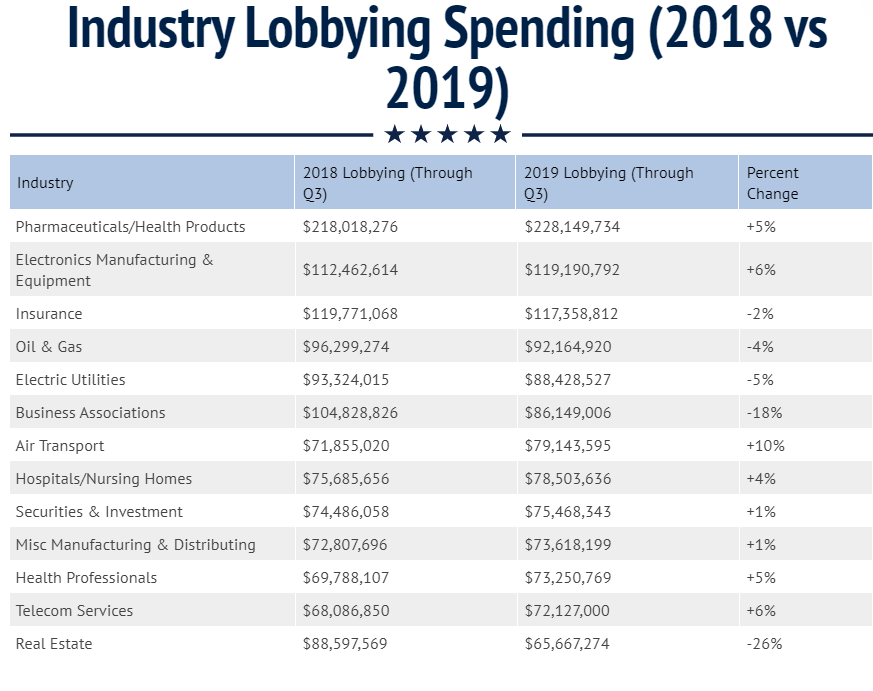
This explains why healthcare is out of control. Healthcare lobbying costs have parked the field, with electronics a distant 2nd.
The pharmaceutical industry is holding on to its title as the top lobbying force in Washington amid pressure from lawmakers at all ends of the ideological spectrum.Drugmakers have spent more than $129 million through September, slightly down from nearly $133 million at this time last year, but still far more than any other industry.
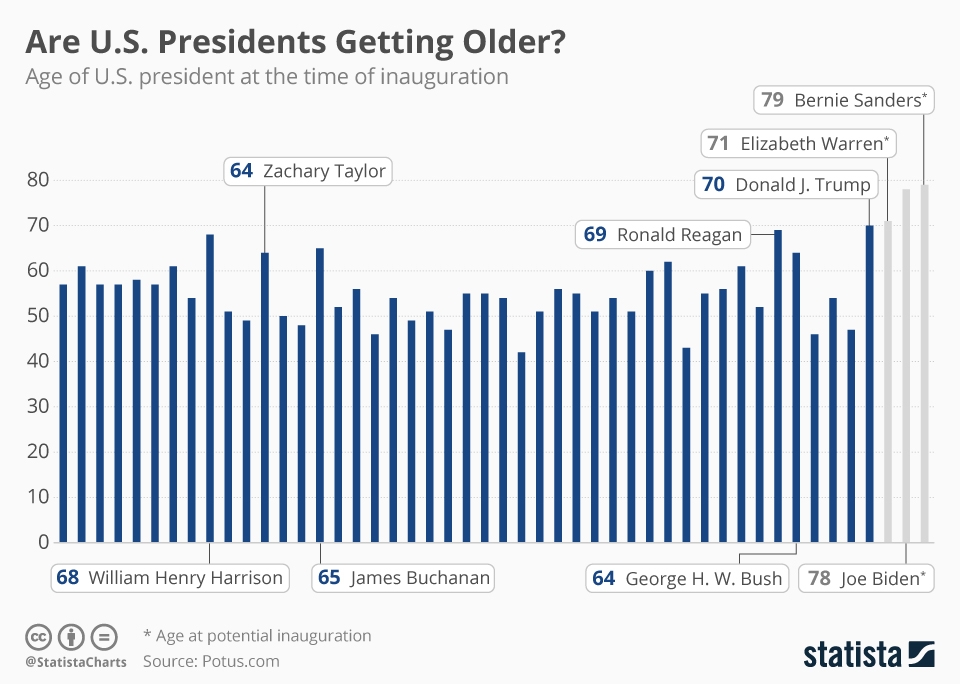
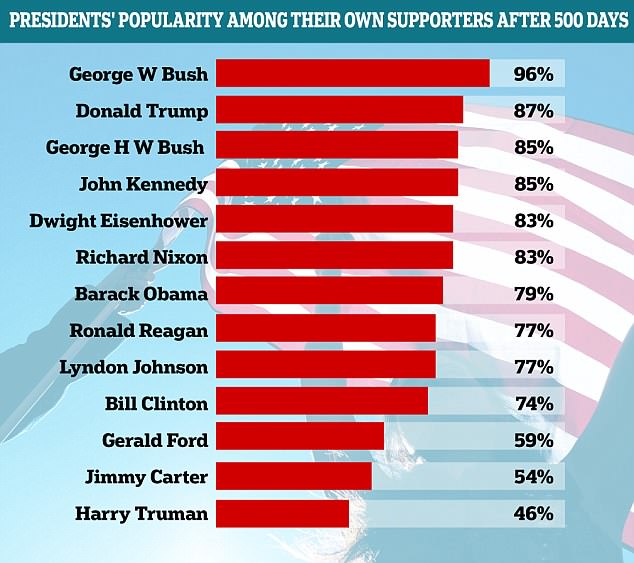
If you thought Reagan or Trump were old when they were elected, look no further then the coming presidential election.
With three front-runners over the age of 70 and one heart attack suffered by candidate Bernie Sanders on the campaign trail, the presidential primaries for 2020 have been putting presidents’ ages on the agenda.
President Trump, who is running for re-election in 2020, is himself the oldest president ever to be inaugurated (he was 70 at the time), and as Statista’s Katharina Buchholz notes, all three democratic frontrunners (Warren, Biden, Sanders) would break that record still.
But taking a look at all presidents’ ages at the time of their inauguration since 1789, the trend only extends to the four individuals already mentioned.
The US’s spot at the top of the global oil-exporting heap was rather short-lived, because according tot he IEA, Saudi Arabia reclaimed the top spot for July and August as hurricanes disrupted US production.
In June, the US has once again surpassed Saudi Arabia and Russia to reclaim the No. 1 spot as the world’s largest oil exporter, according to data from the International Energy Agency.
Record shale production helped the US ship nearly 9 million barrels of crude and other oil products a day in June, surpassing Saudi Arabia, Bloomberg reports. And as more companies build the infrastructure necessary to transport oil from fields in Texas and New Mexico to the coast, the amount of oil exported by the US is expected to climb.
The increase in US crude exports in June was helped by a surge in crude-oil shipments to more than 3 million barrels a day, according to the IEA report. Meanwhile, Saudi Arabia was cutting exports in line with the OPEC+ agreement on production cuts, while Russia’s output was hampered by the Druzhba pipeline crisis.
This would be amazing, we will know more in 2021 when a pair of telescopes that are expected to begin operating in 2021 and 2025 should reveal whether the planet is rocky or has oceans.
Astronomers have discovered a ‘super-Earth’ just 31 light-years away. But, is it habitable or glacial?
N’dea Yancey-Bragg
A potentially habitable ‘super-Earth’ has been discovered just 31 light-years away from our solar system, astronomers announced Wednesday.
The planet, named GJ 357 d, is about six times larger than Earth and orbits a dwarf sun GJ 357, much smaller than our own, every 55.7 days. The international team of astronomers that discovered the planet said in a news release that it could “provide Earth-like conditions.”
“With a thick atmosphere, the planet GJ 357 d could maintain liquid water on its surface like Earth, and we could pick out signs of life with telescopes that will soon be online,” Lisa Kaltenegger, the director of the Carl Sagan Institute at Cornell and associate professor in astronomy, said in a statement.
“If GJ 357 d were to show signs of life, it would be at the top of everyone’s travel list – and we could answer a 1,000-year-old question on whether we are alone in the cosmos.”
Without an atmosphere, the planet would have an equilibrium temperature of 64 degrees below zero, according to NASA, which would make it “more glacial than habitable.”
While using NASA’s planet-hunting Transiting Exoplanet Survey Satellite (TESS) in early 2019, Kaltenegger’s team first discovered another planet GJ 357 b, a “hot Earth,” orbiting the dwarf sun.
The satellite finds other worlds by monitoring the nearest and brightest stars for periodic dips in light. These dips, called transits, suggest a planet may be passing in front of its star.
Follow up observations from the ground lead to the discovery of two more planets orbiting the dwarf sun, including the super-Earth.
Two of the planets discovered are considered too hot to support life as we know it, but GJ 357 d is in the host star’s habitable zone meaning it’s not too hot or too cold.
Kaltenegger told NBC News that a pair of telescopes that are expected to begin operating in 2021 and 2025 should reveal whether the planet is rocky or has oceans.
“This is definitely going to be one of the best targets for these telescopes because it’s so close and so bright,” Kaltenegger told NBC News. “This means we can collect that light and analyze it further to see the chemical composition of the atmosphere, or if we see signs of liquid water or oxygen. The closer the better and the brighter the better, and this one happens to be both.”
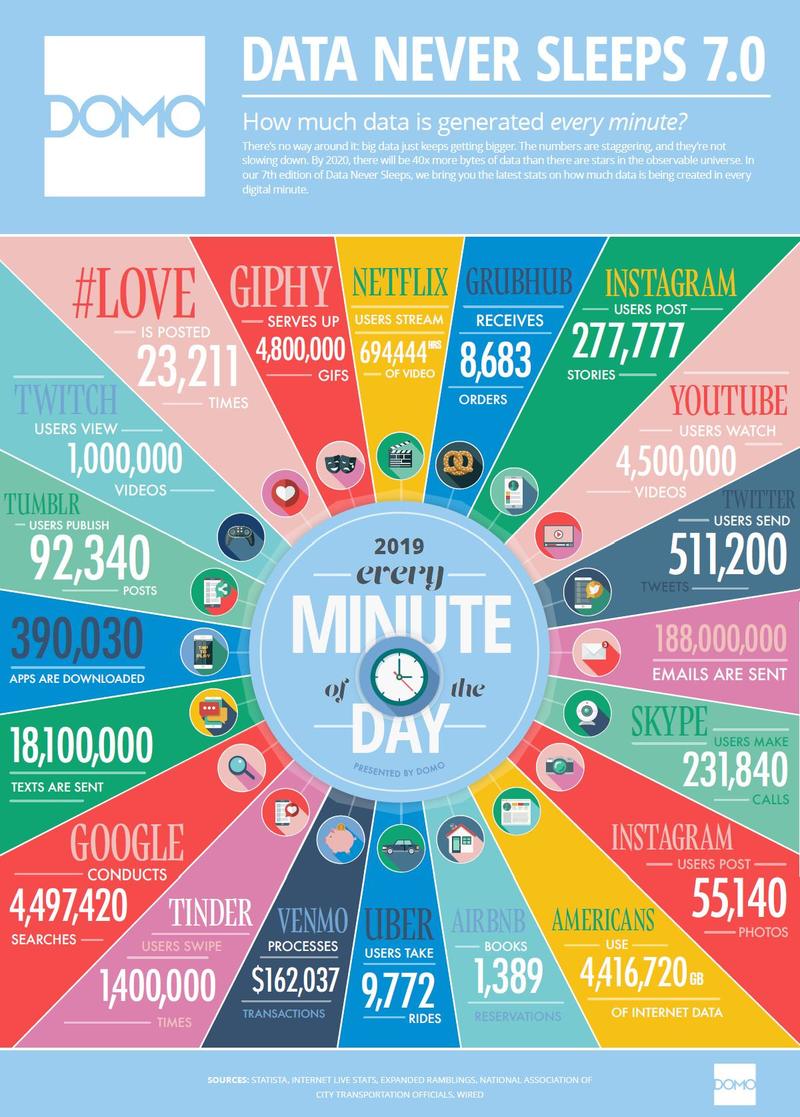
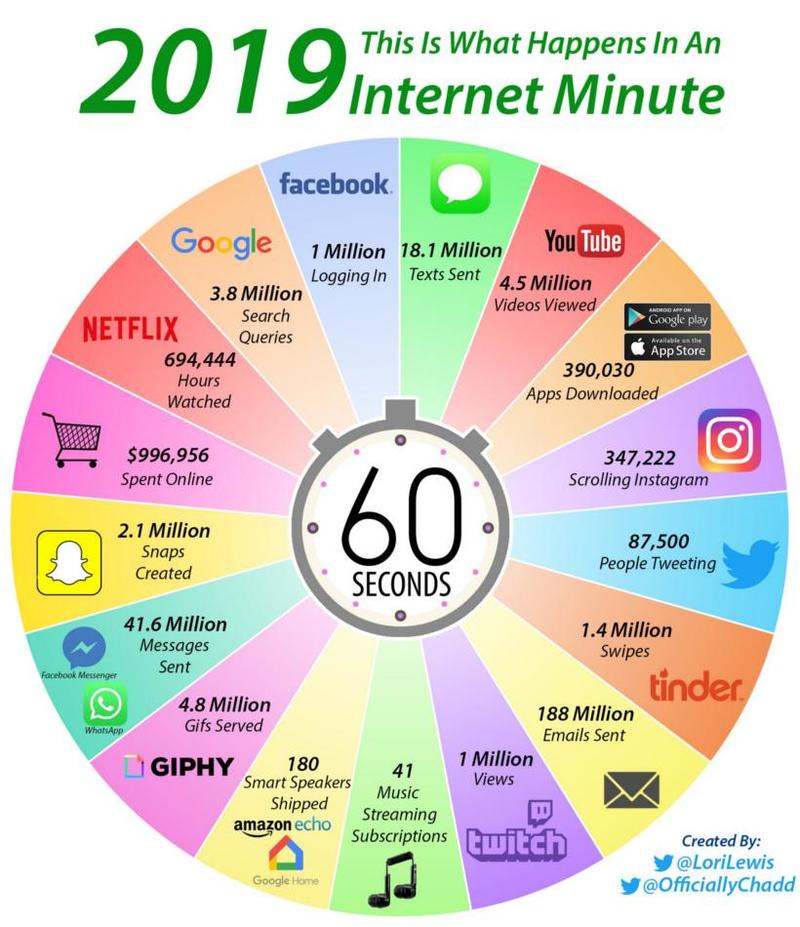
Today’s infographic comes to us from Domo, and it shows the amount of new data generated each minute through several different platforms and technologies.
This makes sense, until a big earthquake hits the U.S. west coast.
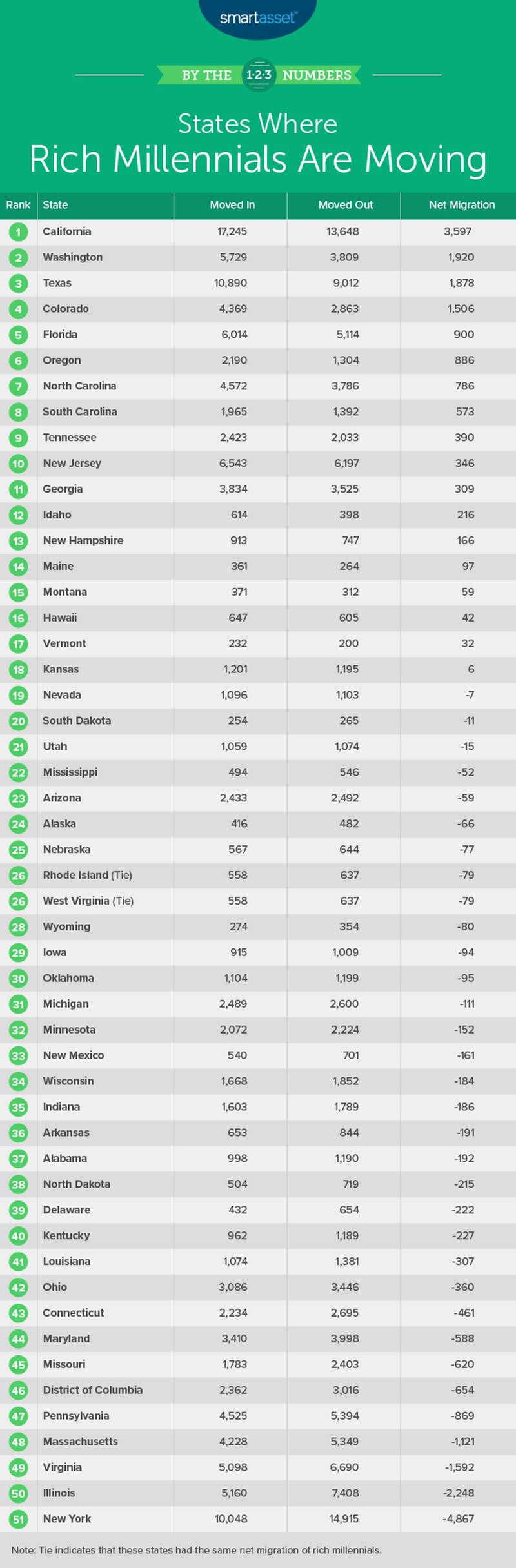
According to a new SmartAsset study, wealthy millennials are moving to the coasts, but the Northeast isn’t one of them. We defined millennials as people under the age of 35 and looked specifically at millennials with adjusted gross incomes (AGI) of at least $100,000.
To determine migration flows of wealthy millennials, SmartAsset examined data (IRS 2015 to 2016 tax year) from all 50 states and the District of Columbia. To calculate net inflow of each state, the study used inflow minus the outflow of wealthy millennials to find precisely which states wealthy millennials are moving to.
Seventy percent of the states in the top ten list of where wealthy millennials are moving to are located on the East and West Coast. With Texas on the Gulf Coast, and Colorado and Tennessee in the Heartland.
Advancement in technology isn’t always for the better. It would appear that 5G radiofrequency has many health risks, along with other draw backs.
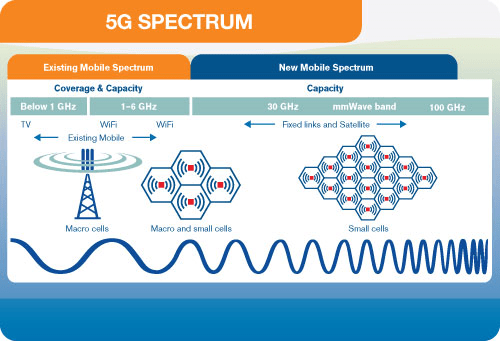
5G radiofrequency (RF) radiation uses a ‘cocktail’ of three types of radiation, ranging from relatively low-energy radio waves, microwave radiation with far more energy, and millimeter waves with vastly more energy (see below). The extremely high frequencies in 5G are where the biggest danger lies. While 4G frequencies go as high as 6 GHz, 5G exposes biological life to pulsed signals in the 30 GHz to 100 GHz range. The general public has never before been exposed to such high frequencies for long periods of time.
This is a big deal. It turns out that our eyes and our sweat ducts act as antennas for absorption of the higher-frequency 5G waves. And because the distances these high-energy waves can travel is relatively short, transmitters will be required closer to homes and schools than earlier wireless technologies: the build-out will add the equivalent of a cell tower every 2-10 houses.
The “medical people” have conducted over 2,000 international evidence-based studies that link health impacts with pulsed radiowave radiation from cell towers, routers, cell phones, tablets, and other wireless devices. These studies tell us that RF radiation is harmful at even low and short exposures, and that it impacts children and fetuses more rapidly than adults. Among the findings are that RF radiation is carcinogenic, causes DNA damage, affects fertility and the endocrine system, and has neurological impacts. Pulsed electromagnetic frequencies have also been shown to cause neurological symptoms: depression, anxiety, headaches, muscle pain, attention deficits, insomnia, dizziness, tinnitus, skin tingling, loss of appetite, and nausea.
The U.S. Government has known of these risks since at least 1971, when the Naval Medical Research and Development Command published a bibliography containing 3,700 references reporting 100 biological and clinical effects attributed to microwave and radio-frequency radiation.
Recent findings, such as the $30 million 2018 U.S. National Toxicology Program (NTP) Study, have corroborated the findings of all well-designed heart and brain cancer studies of people with 10 or more years’ exposure to cellular radiation from cell towers and cell phones. They all agree: RF radiation causes cancer.
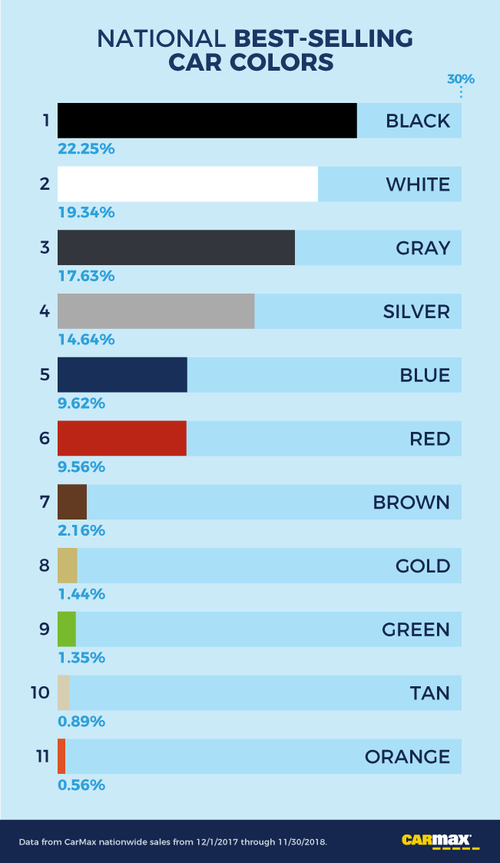
Black was the top choice among CarMax buyers, with 22.25% of all sales. White was a close second, with 19.34% of sales. Gray (17.63%) and silver (14.64%) rounded out the top four most popular colors. The chart below shows the national best-selling vehicle colors at CarMax.
For what it’s worth…..sometimes your past can come back to haunt you!!
Who was MISS LUBE RACK OF 1955 ?
Can You believe this? Take note all you young people . . .
pictures, especially on the Internet, never go away.
Guess who was Miss Lube Rack of 1955 ?
I know, you have no idea! ! She could be a Movie star?
Recording artist? Politician?
Her name is Nancy D’Alesandro.
Still stumped?
Nancy D’Alesandro is today known as Nancy Pelosi, Congressional Speaker of the House on Capital Hill, yes, also known as, drum roll, the former Miss Lube Rack 1955!
This is impressive, innovative, and potentially dynamic advanced technology. We are thinking in terms of huge potential in a variety of industries. Is this the next great thing? Time will tell …
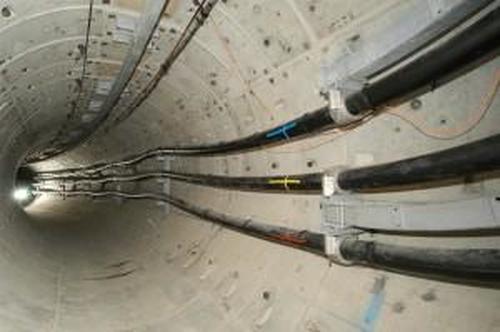
New Yorkers traveling in the Holland Tunnel, a vehicular tunnel underneath the Hudson River connecting Lower Manhattan and New Jersey, are now discovering that the next generation of communication technology is being tested right outside their car windows, said Bloomberg.
Lining the 8,558 feet tunnel is a fiber-optic cable that harnesses the power of quantum mechanics to guard corporations and government against potential hackers or spies.
A technology startup called Quantum Xchange said last Fall it signed a contract giving it exclusive access to 500 miles of fiber-optic cable running along the East Coast to build what it claims will be the nation’s first quantum key distribution (QKD) network. The first span of the system links New York City to New Jersey via the Holland Tunnel will allow financial institutions and government agencies to safely transport information between offices in Manhattan and data centers abroad.
Bloomberg said the QKD approach used by Quantum Xchange works by sending an encoded message in bits while the keys to decode it are sent in the form of quantum bits, or qubits. These packets are sent via photons, which travel through fiber-optic cables. The key to this technology is that any attempt to snoop on a qubit immediately destroys its fragile quantum state, wiping out all data it caries, which basically means this technology is unhackable at the moment.
“Financial firms see this as a differentiator,” says John Prisco, chief executive officer of Quantum Xchange. Prisco says several large financial institutions are testing his fiber pipes, but he declined to tell Bloomberg the names of them, citing nondisclosure agreements.
The Chinese government has already constructed a 1,200-mile QKD-protected link between Beijing and Shanghai.
QKD has distance limitations. It can only protect data in transit, not when it is resting in data centers. And because fiber-optic cabling itself absorbs some light, a single photon cannot travel far.
Researchers have managed to stretch the network 260 miles in lab conditions. For real-world conditions, the total distance is about 60 miles.
Further transmissions require a series of “trusted nodes,” however nodes are prone to hackers or physical tapping. China solves this by placing armed guards at each of the node stations along the 1,200-mile route.
With six QKD startups in the US. Qubitekk Inc., a startup in Southern California, has a US Department of Energy contract for a pilot program to secure the communications between power plants.
Telecommunications companies including the UK’s BT Group Plc and Japan’s NTT Corp. have indicated they would soon explore options for QKD-protected networks.
There has been a significant push towards QKD networks thanks to Edward Snowden, a contractor working for the US National Security Agency, leaked documents that showed intelligence agencies were spying on networks via hard taps into fiber-optic cables. With QKD technology, government and or spies can no longer do that.
You probably think you are, according to new research from the Pew Research Center, but that doesn’t necessarily mean you’re right.As HowMuch.net explains, it turns out household size is a major determiner of status in the lower, middle and upper classes.
Hmm…Massachusetts ranks No. 1 for the percentage of its residents 25 and older—42.1 percent–who have earned at least a bachelor’s degree.
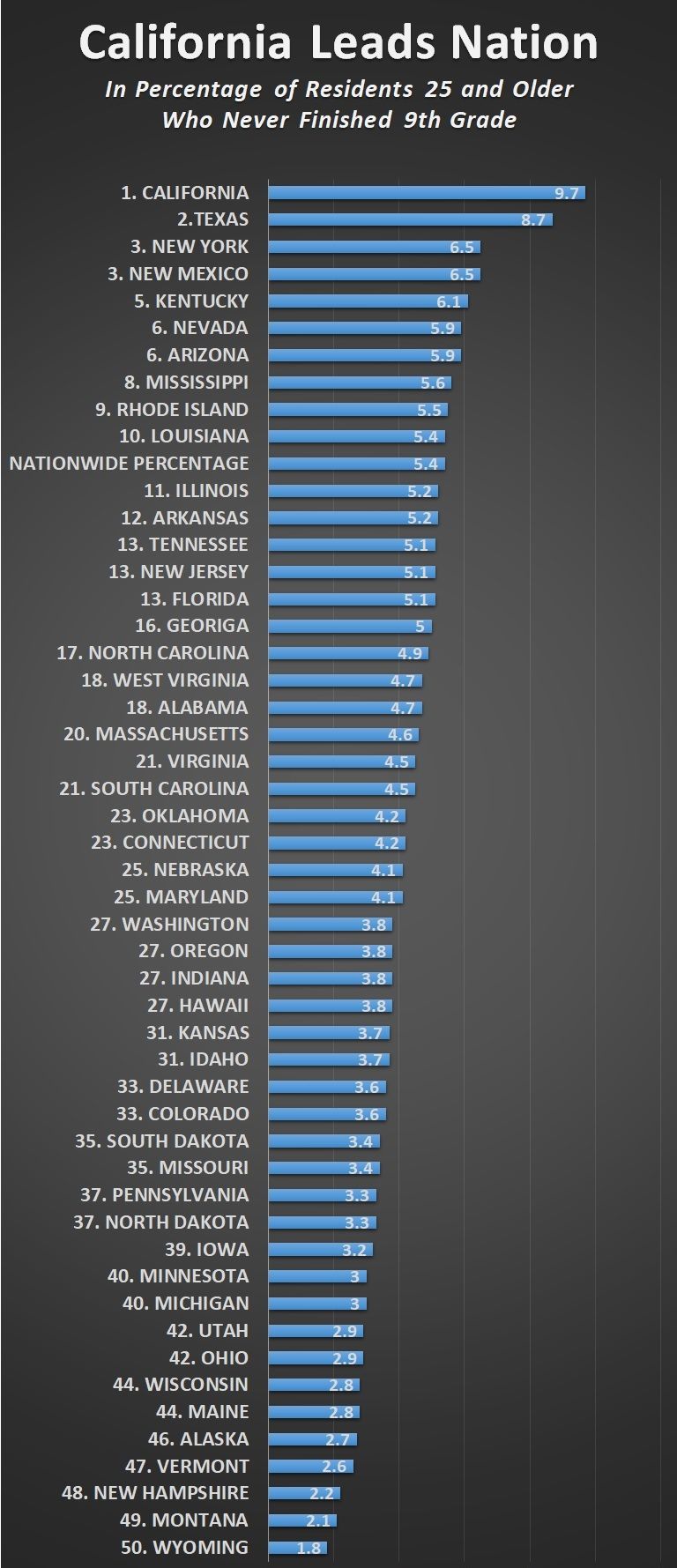
(CNSNews.com) – California ranks No. 1 among the 50 states for the percentage of its residents 25 and older who have never completed ninth grade and 50th for the percentage who have graduated from high school, according to new data from the Census Bureau.
Texas ranks No. 2 for the percentage of its residents 25 and older who have never completed ninth grade and 49th for the percentage who have graduated from high school.
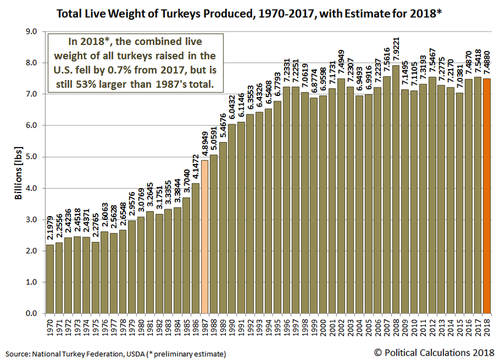
There are signs that wee birds are in greater demand. Inventories of whole hens, which are smaller than males, are down 8.3 percent from a year ago, the latest U.S. Department of Agriculture data show. Whole toms, the males, are up 6.9 percent.
Boy, wouldn’t your life insurance company like to know this!
Want to know when you’ll die?
UCLA biostatistician Steve Horvath stumbled across a reliable method of predicting a person’s lifespan based on 300-500 DNA markers which reveal whether someone is aging unusually fast or slowly compared to their chronological age, according to a recent research paper. And while it can’t predict the exact date and time of your demise (yet), it comes pretty close.
Horvath became particularly intrigued by how certain chemical changes to cytosine—one of the four DNA bases, or “letters” of the genetic code—make genes more or less active. Given someone’s actual age, looking for these changes in that person’s DNA can tell him whether the person’s body is aging unusually fast or slowly. His team tested this epigenetic clock on 13,000 blood samples collected decades ago, from people whose subsequent date of death was known. The results revealed that the clock can be used to predict mortality. –MIT Technology Review
Horvath, a straight man who grew up in Frankfurt, Germany with a gay identical twin, made the discovery while helping a colleague analyze biological data from the saliva of twins with opposite sexual orientations. The original goal was to determine whether chemical changes could indicate whether certain genes were turned on or off.
And while he wasn’t able to link homosexuality to so-called epigenetic changes (which alter the activity of DNA but not the DNA sequence itself), Horvath found a powerful link between epigenetic changes and aging.
“I was blown away by how strong the signal was,” he says. “I dropped most other projects in my lab and said: ‘This is the future.’”
Aging eight or more years faster than your calendar age equates to twice the typical risk of dying, while aging seven years slower is associated with half the risk of death, Horvath says. His lab has developed a new version that is such a precise life span predictor they named it after the Grim Reaper: DNAm GrimAge. The epigenetic clock is more accurate the younger a person is. It’s especially inaccurate for the very old. –MIT Technology Review
Luck vs. genetics
Horvath finds that around 40% of the speed of the epigenetic clock is determined by genetics, while te rest if due to “lifestyle and luck.”
As we age, the cytosine at hundreds of thousand of spots in our DNA either gains or loses methyl chemical groups (CH3). Horvath’s insight was to measure these increases and decreases in methylation, find the 300 to 500 changes that matter most, and use those to make his clocks. His findings suggest that the speed of the clock is strongly influenced by underlying genes. He estimates that about 40% of the ticking rate is determined by genetic inheritance, and the rest by lifestyle and luck. –MIT Technology Review
Scientist Morgan Levine, who completed postdoctoral research on Horvath’s lab and currently heads a lab at Yale, has begun to compare epigenetic profiles with profile cells extracted from the lining of a healthy umbilical cord. She thinks that she will eventually be able to predict who is at the greatest risk of which diseases, as well as determine how to delay aging.
“Your genes aren’t your fate, but even less so with things like epigenetics,” she says. “There definitely should be things we can do to delay aging if we can just figure out what they are.”
A few likely contenders are totally unsurprising. Eating a healthy diet including lots of vegetables and fish is associated with slower epigenetic aging. Feel older when you’re sleep deprived? It’s probably not a coincidence. Horvath has shown that people with insomnia are more likely to show accelerated epigenetic aging. “Everything you associate with a healthy lifestyle does relate to the new biomarkers in the expected way, which is a boring result, but it’s scientifically very exciting,” he says. –MIT Technology Review
Exercise is bullshit (ok, not entirely)
While diet and lifestyle are a significant factor in longevity, Horvath surprisingly found that regular exercise doesn’t add more than a few months to your life. That said, he says he wants like to look at changes in muscle too in order to see whether exercise makes a difference there.
Horvath hopes that refinements to his method will make it precise enough to reflect changes in lifestyle and behavior, as well as assist in the science of aging. While hundreds of millions of dollars have been thrown behind biotech solutions to slow down aging and defer disease, Horvath hopes that his clock might be able to help researchers determine whether various treatments are effective without having to wait 50 years to find out.
Insurance companies really like the cut of Horvath’s scythe
If there’s one group who would love a crystal ball when it comes to death, it’s the insurance industry. Companies such as Reinsurance Group of America have already begun exploring epigenetic clocks to “tweak and personalize risk assessments” for life insurance products, reports the Review.
Right now, rates are based largely on demographics—people’s gender and age—and a few health metrics, such as whether they smoke. The clock adds another useful data point.
Such personalization raises questions about fairness. If your epigenetic clock is ticking faster through no fault of your own, should you be charged a higher rate for life insurance? The Genetic Information Nondiscrimination Act of 2008—known as GINA—protects against discrimination on the basis of genes. But it doesn’t address epigenetics.
There’s also the issue of privacy. Your likely life span or true biological age is information that many consider intensely personal. For now, regulations and privacy policies don’t even consider the possibility of such information. But as the science quickly progresses, questions about how to use and protect this data will become ever more pressing. –MIT Technology Review
Death clocks for death panels?
Gal Salomon, CEO of Israeli company Clew Medical, which uses artificial intelligence to identify medical risks in hospitals, initially thought the notion of a death predictor was unethical. Then, he realized that it could help doctors “to understand where we need to stop.” Clew has developed an algorithm which can help doctors and family members switch from aggressive to palliative care, “overruling the typical instinct to provide heroic life-saving measures.” Clew’s technology can also alert a family that the end is near, according to Salomon.
That said, some have doubted the usefulness of Horvath’s death clock. “I haven’t seen any of these purported predictive algorithms be precise in terms of timing of death—to the contrary,” says Diane Meier, a professor of geriatrics and palliative medicine at the Icahn School of Medicine at Mount Sinai in New York City. “People live for a really long time with a very high burden of disease and frailty,” she says.
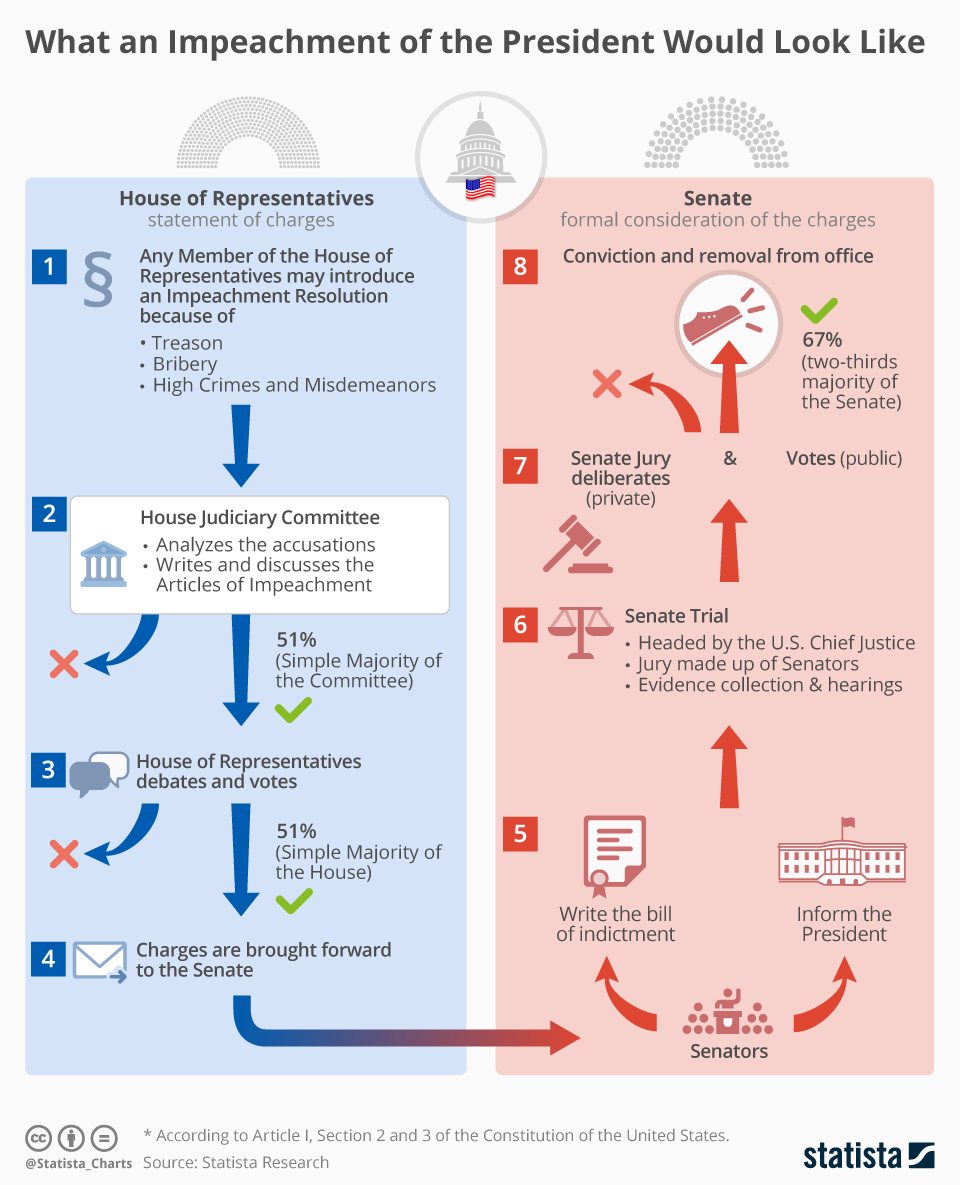
An impeachment is a lengthy process and, as Statista’s Fabian Moebus notes, requires a simple majority from the House Judiciary Committee, the House of Representatives and a two-thirds majority of the Senate.
While each step is quite explicitly described by the constitution, the possible indictments are worded rather vaguely. Consequently, most attempts to impeach the president are rejected by the House Judiciary Committee.
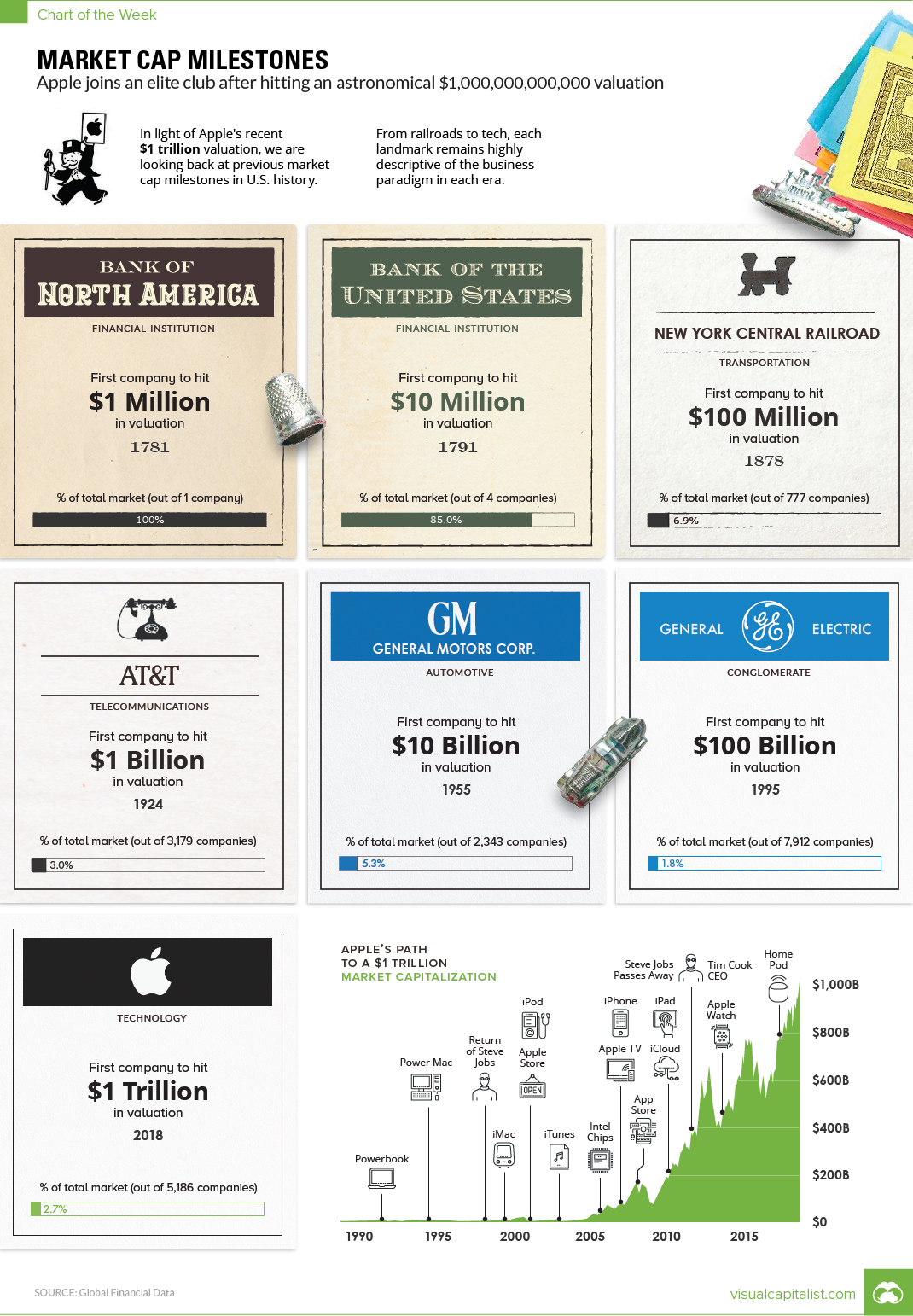
Apple goes from near bankruptcy in 1997 to a trillion dollar market cap in 2018, what a run!
The market has been buzzing about Apple’s $1 trillion market valuation.
It’s an incredible amount of wealth creation in any context – but, as Visual Capitalist’s Jeff Desjardins notes, getting to 12 zeros is especially impressive when you consider that Apple was just 90 days from declaring bankruptcy in 1997.
Here are the major market cap milestones in the U.S. that preceded Apple’s recent $1 trillion valuation, achieved August 2nd, 2018:
Bank of North America (1781)
The first company to hit $1 million in market capitalization. It was the first ever IPO in the United States.
Bank of the United States (1791)
The first company to hit $10 million in market capitalization had a 20 year charter to start, and was championed by Alexander Hamilton.
New York Central Railroad (1878)
The first company to hit $100 million in market capitalization was a crucial railroad that connected New York City, Chicago, Boston, and St. Louis.
AT&T (1924)
The first company to hit $1 billion in market capitalization – this was far before the breakup of AT&T into the “Baby Bells”, which occurred in 1982.
General Motors (1955)
The first company to hit $10 billion in market capitalization. The 1950s were the golden years of growth for U.S. auto companies like GM and Ford, taking place well before the mass entry of foreign companies like Toyota into the domestic automobile market.
General Electric (1995)
The first company to hit $100 billion in market capitalization was only able to do so 23 years ago.
“Sorry Millennials, your time in the limelight is over.”
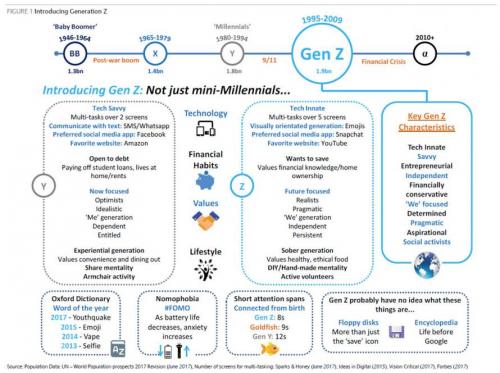
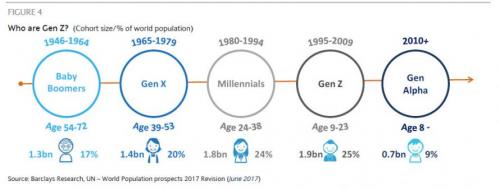
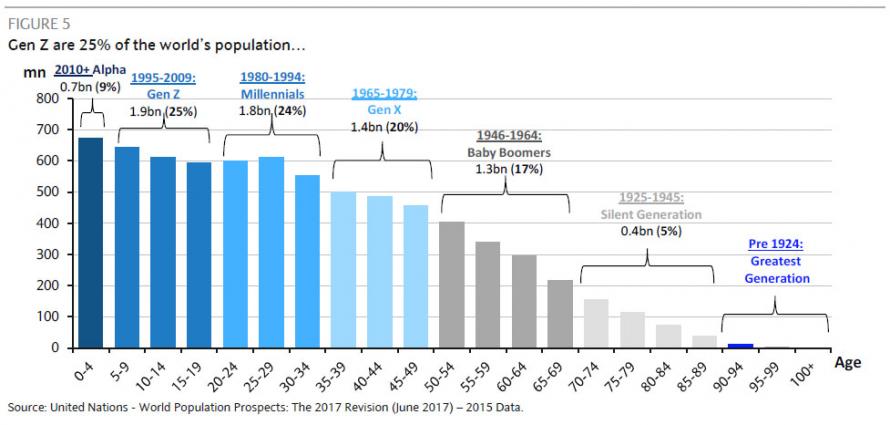
That’s the conclusion of a new report from Barclays analyst Hiral Patel, who writes that it’s time for the Millennials to make way for the new kids on the block – Generation Z – a generational cohort born between 1995 and 2009, and already larger in size than the Millennials (1980-1994).
According to Barclays, the current fixation with Millennials makes them the most studied generation, which in turn has caused the use of this term to simplify to a label for anyone that may be young today; however the irony here is that Millennials are not necessarily young anymore and we run the risk of overlooking the next cohort – Generation Z – who are now coming of age.
Citing survey-based research from a range of sources, Barclays suggests that there are fundamental differences separating Generation Z from the Millennials (Figure 1), material enough for marketplaces to take note today.
he reason for the Barclays report is to asset that this “coming of age” is worth capitalising on now, with Generation Z in the US already having $200bn in direct buying power and $1tn in indirect spending power as they command significantly more influence on household purchases than prior generations.
Furthermore, by 2020, Generation Z are expected to be the largest group of consumers worldwide, making up 40% of the market in the US, Europe and BRIC countries and 10% in the rest of the world (Booz Co).
he reason for the Barclays report is to asset that this “coming of age” is worth capitalising on now, with Generation Z in the US already having $200bn in direct buying power and $1tn in indirect spending power as they command significantly more influence on household purchases than prior generations.
Furthermore, by 2020, Generation Z are expected to be the largest group of consumers worldwide, making up 40% of the market in the US, Europe and BRIC countries and 10% in the rest of the world (Booz Co).
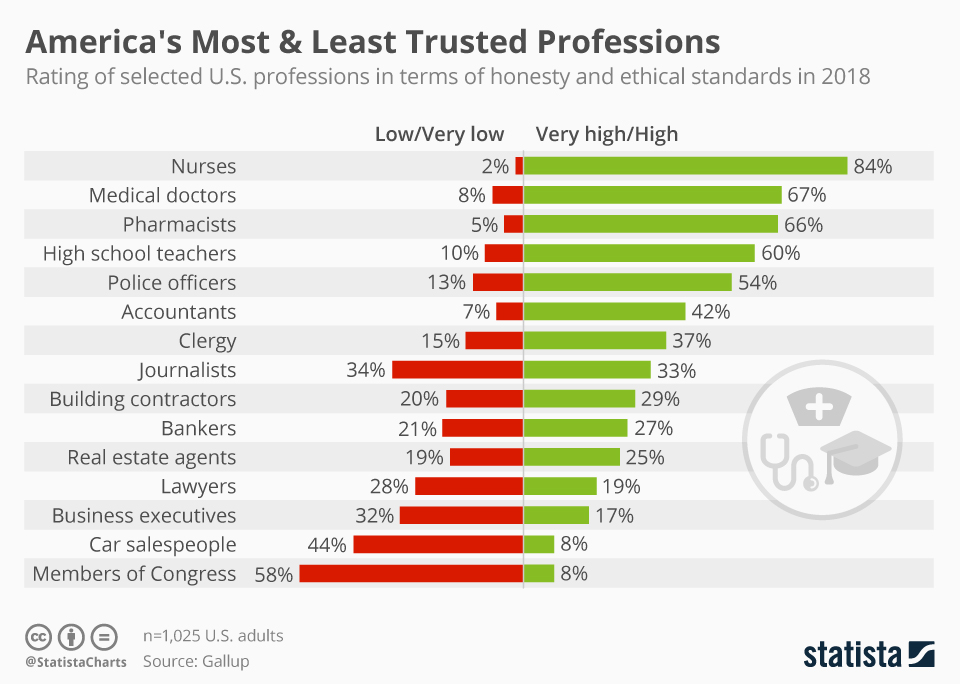
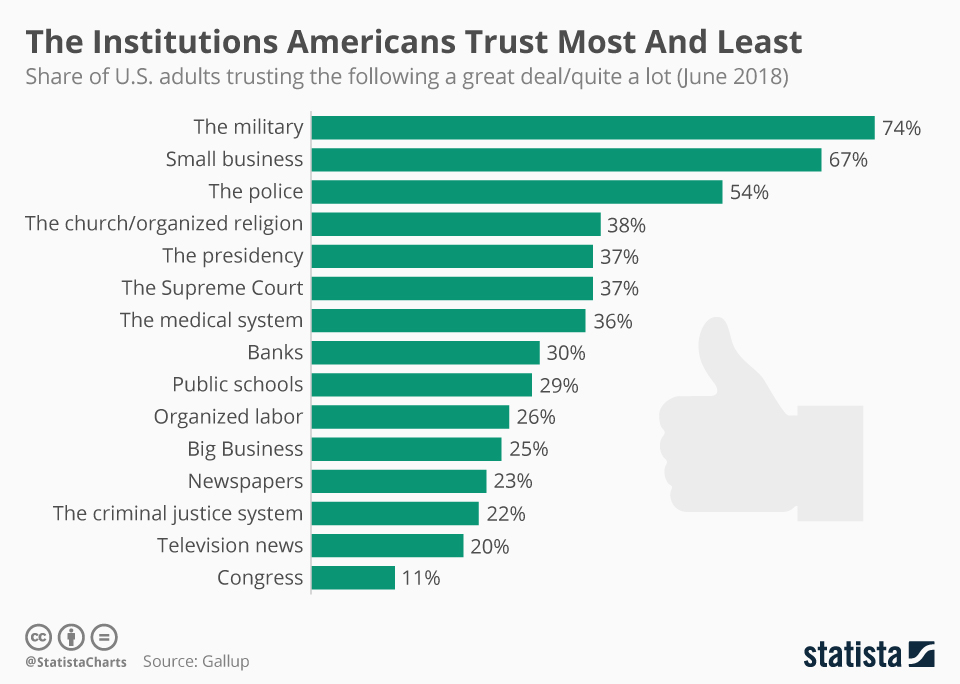
Gallup recently polled U.S. adults about their confidence levels in 15 different societal institutions, finding only three had a majority-level of trust.
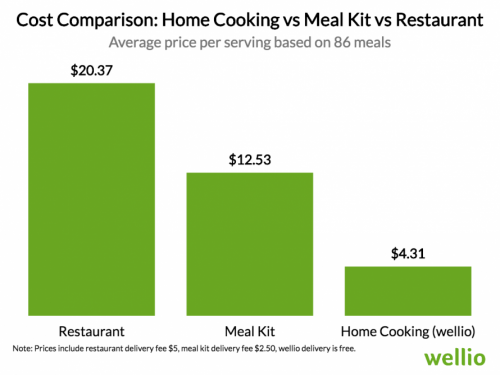
By far, getting dinner delivered from a restaurant is the most expensive meal option.
At over $20 per serving on average, a restaurant delivered meal is almost three times as expensive as a meal kit and five times as expensive as cooking at home from scratch. Obviously when you cook at home, you’ll spend more time but you usually end up with a healthier meal because you’re the one to decide what exactly goes into it.
Next, let’s look at the cost of getting specific meals delivered via restaurant delivery versus making the meal from scratch.
The best deal and meals that save you the most, are made at home.
America’s new supercomputer beats China’s fastest machine to take title of world’s most powerful supercomputer. Summit is a stepping stone toward a world of exascale computing.
The winner: The US Department of Energy’s Oak Ridge National Laboratory in Tennessee has taken the wraps off Summit, which boasts peak computing power of 200 petaflops, or 200 million billion calculations a second. That makes it a million times faster than your typical laptop.
The loser: China. Summit is 60 percent faster than the previous supercomputing leader, the Sunway TaihuLight based in the Chinese city of Wuxi. Consolation prize: China still boasted way more entries than the US in a list of the fastest 500 supercomputers published last year.
Jack Wells of Oak Ridge says the experience of building Summit, which fills an area the size of two tennis courts and carries 4,000 gallons of water a minute through its cooling system to carry away about 13 megawatts of heat, will help inform work on exascale machines, which will require even more impressive infrastructure. Things like Summit’s advanced memory management and the novel, high-bandwidth linkages that connect its chips will be essential for handling the vast amounts of data exascale machines will generate. Scientists at the national lab say they’ve already leveraged Summit’s AI smarts to conduct what is effectively an exascale comparative genomics calculation.
Supersized: The machine’s 4,608 servers and associated gear fill the space of two tennis courts and weigh more than a large commercial aircraft.
Why this matters: Topping the supercomputing charts isn’t just a matter of national pride. The machines are widely used in industry and also for national security tasks, such as developing nuclear weapons. Lessons from Summit will also inform the push to create “exascale” computers capable of handling a billion billion calculations a second. These are expected to come online in the early 2020s.
TV falls further behind, suffers first ad revenue decline since the Financial Crisis.
You might think you never look at these ads or click on them, and you might think they’re the biggest waste of money there ever was, but reality is that internet advertising revenues in the US are surging, and are blowing all other media categories out of the water. But only two companies divvy up among themselves nearly 60% of the spoils.
Internet advertising revenues in the US soared 21.4% in 2017 from a year earlier to a record of $88 billion, thus handily demolishing TV ad revenues, which declined 2.6% to $70.1 billion, according to annual ad revenue report by the Interactive Advertising Bureau (IAB).
The U.S. Air Force’s unmanned X-37B space plane has marked its 200th day in orbit on a clandestine mission.
Known as Orbital Test Vehicle-5 (OTV-5), the latest mission began September 7, 2017 after it was launched into space atop a SpaceX Falcon 9 booster from NASA’s Kennedy Space Center in Cape Canaveral, Florida.
According to Air Force officials, one payload flying on OTV-5 is the Advanced Structurally Embedded Thermal Spreader, or ASETS-11, of the U.S. Air Force Research Laboratory (AFRL). This cargo is testing experimental electronics and oscillating heat pipes for long durations in the space environment. –space.com
The Air Force has not disclosed how long the unpiloted, reusable craft will remain in orbit, however experts have said it’s likely to land at the Kennedy Space Center’s Shuttle Landing Facility, where the OTV-4 mission landed on May 7, 2007 – a first for the program, as previous missions all ended with a tarmac touchdown at California’s Vandenberg Air Force Base.
“The X-37B has been and remains a technology demonstrator,” said Joan Johnson-Freese, a professor in the National Security Affairs Department at the Naval War College in Newport, Rhode Island.
“Given that most space technology is dual-use, with the ever-increasing sway toward warfare in space, it’s likely that the more militaristic uses of the space plane will be pursued more vigorously, and likely openly given the [presidential] administration’s proclivity toward chest thumping,” Johnson-Freese told Space.com.
Milestone Missions via Space.com
Each X-37B mission has set a new flight-duration record for the program.
OTV-1 began April 22, 2010, and concluded on Dec. 3, 2010, after 224 days in orbit.
The second OTV mission began March 5, 2011, and concluded on June 16, 2012, after 468 days on orbit.
OTV-3 chalked up nearly 675 days in orbit before finally coming down on Oct. 17, 2014.
And OTV-4 conducted on-orbit experiments for 718 days during its mission, extending the total number of days spent in space for the OTV program to 2,085 days.

The United States takes pride in being a technological leader in the world. Companies such as Apple, Alphabet, IBM, Amazon and Microsoft have shaped our (digital) lives for many years and there is little indication of that changing anytime soon.
But, as Statista’s Felix Richter notes,when it comes to IT infrastructure however, the U.S. is lagging behind the world’s best (and many of its not-so-best), be it in terms of home broadband or wireless broadband speeds. According to OpenSignal’s latest State of LTE report, the average 4G download speed in the United States was 16.31 Mbps in Q4 2017.